

松菸 FESTIVAL
Flux No.5 / Platform
作品說明:
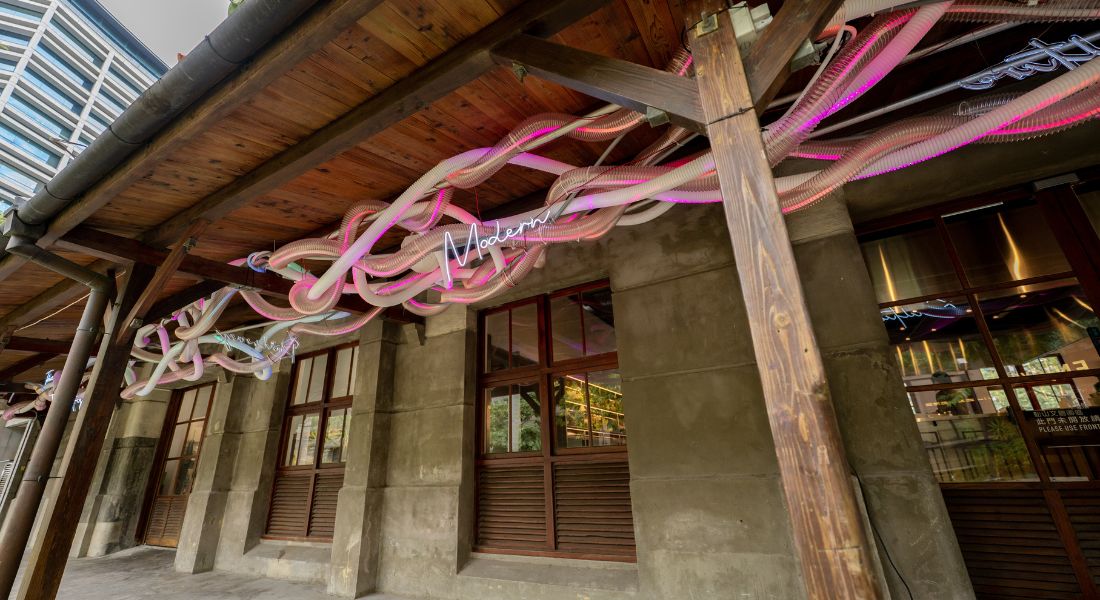
如同一張懸掛的流動網絡,《Flux No.5 / Platform》作品表面上看似雕塑,實則為一座互動裝置,當觀者穿越廊道時,錯綜複雜的導管系統感應觀者的靠近與周圍的聲音,即時驅動光線變化,讓機器修理廠的屋頂結構轉化為一個隨身體與聲響律動的呼吸系統,將人與空間之間的互動轉化為光的軌跡。
藝術家靈感來自於城市中無所不在卻時常被忽略的基礎設施:空氣、水、能源、資訊與廢棄物的流通網絡。在半透明管線的曲線之間,閃現著LED文字:「Railway」、「Industry」、「Tobacco」、「1937」、「Modern」、「Culture」、「1998」——這些語彙宛如時代的地標,標示出一條視覺與感官並行的歷史流動軌跡。它們不僅是歷史參照,更是空間敘事的光之節點,與環境和觀眾即時對話。
Like a mobile network, Flux No.5 / Platform is suspended in the corridor structure of the old Machine Repair Plant in the Park. Seemingly sculptural, the work is an interactive installation that transforms the industrial corridor’s rooftop into a breathing system, pulsing in rhythm with people’s bodies and sounds. When passing through the corridor, each person becomes an activator of the system. An intricate system of conduits and sensors that unfold as it responds to the audience’s voices and movements, instantly triggering changes in the light.
The artist drew inspiration from the city’s ubiquitous yet often overlooked infrastructure, such as that designed to circulate air, water, energy, information, and waste. Amidst the curving and translucent pipes are LED signs with flickering words that read “Railway,” “Industry,” “Tobacco,” “1937,” “Modern,” “Culture,” and “1998.” The words appear like icons that mark a particular era, pointing out a visual and sensory trajectory with traces of history’s progression. They serve not only as historical references but as luminous nodes in a narrative about this particular place, with real-time dialogue facilitated between the environment and the audience.
1937 ─ 松山文創園區的前身是1937年臺灣總督府專賣局興建的松山煙草工場。
Songshan Cultural and Creative Park was originally built in 1937 as the Songshan Tobacco Factory of the Taiwan Governor-General (Sōtokufu).
1998 ─ 松山菸廠停止生產。
The year the Songshan Tobacco Factory ceased production.